Memes and mind control: Are memes controlling your mind?
- Feb 25
- 7 min read
The new religion is not a church: it is memetics
I'm not saying this as a pretty metaphor, I'm saying it as a social mechanism: today many people don't believe based on evidence, they believe based on belonging. And that belonging is built on ideas that are copied, mutated, and competed as if they were organisms.
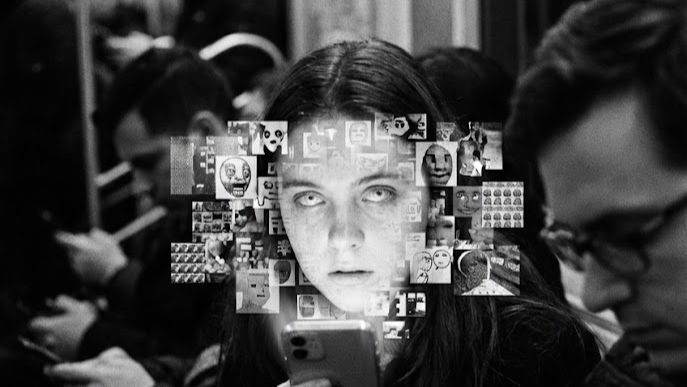
Memes, yes, but not “internet jokes” : narrative units that stick in your head and reshape your world. When an idea gives you an identity, clear enemies, your own language, and a sense of mission, it no longer functions as an opinion. It functions as faith. That's why contemporary mind control seems more powerful to me than any MK-Ultra -type fantasy . Not because there's a secret lab with a magic syringe, but because control today is distributed, cheap, and massive. It doesn't need "hypnosis": it needs repetition, social reward, and fear. Conspiracy theories, in that sense, are not just delusions. Sometimes they are imaginary "blueprints" of possible futures. Ideas that circulate for years, become familiar, and when the right context arises… become acceptable. As if the brain of a society were rehearsing a script until one day it decides to act it out. Herein lies the unsettling aspect: political reality is not only built with laws and money. It is also built with narratives that pave the way.
The question then is not "who is behind it?", but "what ideas are winning and why?".

Because if memetics is the new religion, the real power lies in deciding which stories become liturgy. It's happening: negative ideas, biases, and mindsets are being instilled in us. And no, you don't need to imagine a dark room with villains laughing as they press buttons. The real version is cruder and more effective: a multitude of systems—media, social networks, politics, advertising, and algorithms—compete for your attention. And the fastest way to win it is to instill fear, anger, disgust, tribalism, and an "us versus them" mentality.
Here's my thesis (and yes, it's a thesis, not a joke): the new religion is not a church. It's memetics.
Not because there are dogmas set in stone, but because today so many people don't believe based on evidence: they believe based on belonging. And belonging is manufactured with ideas that are copied, mutated, and competed as if they were organisms.
The trick is that they almost never try to convince you with arguments. They frame you.
Once the framework is in place, your brain does the rest of the work on its own. If you frame everything as a threat, any news item will be seen as confirmation. If you're framed with the idea that "others are idiots or bad," you stop listening: you react. And when you react, you share. And when you share, the algorithm applauds. It's an emotional casino perfectly designed to make you waste time and for those who live off your impulses to win.
And listen: this isn't just about "the right" or "the left." It's about business and human biology. If something angers you, it hooks you. If it hooks you, it's profitable.
A meme is not a joke: it's a cultural tool
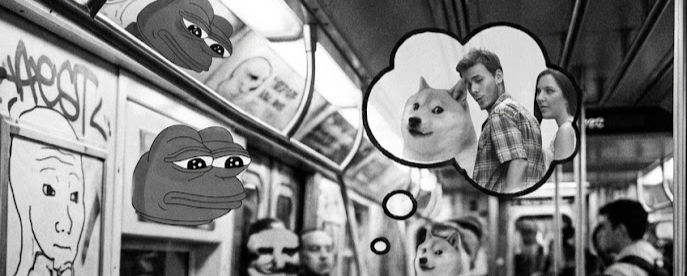
When I say "meme," I'm not just talking about a funny image. I'm talking about a meme as a cultural unit: a short, catchy, easily repeatable idea that travels fast and reproduces without asking your permission.
A meme can "control" you in four very specific ways.
First, it captures your attention: the simpler, more emotional, and more repeatable it is, the more it comes back. Your mind hates loose ends and loves what's easy.
Second, it instills a mental framework: it doesn't tell you "what to think," it tells you "from what perspective to think." If something is labeled "woke," "agenda," "propaganda," "sellout," or "NPC," your viewpoint has already been narrowed before you even see reality. It's a label that saves you from nuance and buys you a reaction.
Third, it creates a sense of community: the meme comes with laughter, moral superiority, and belonging. And the brain repays that dopamine rush with loyalty. If your group repeats it, you repeat it. Not because it's true, but because it's "ours."
Fourth, it automates responses: it gives you prefabricated phrases so you don't have to think. "That's fake," "they're all the same," "it's an agenda." When language becomes a template, thinking becomes a template.
So, mind control? In the strong sense of "they force you to do X," no. But in the realistic sense of "they push you to feel and think within certain parameters," yes, all the time.
And that's why I say that contemporary mind control can be more powerful than any MK-Ultra-type fantasy. Not because there's a magic syringe, but because control is now distributed, cheap, and widespread.
It doesn't need hypnosis: it needs repetition, social reward, and emotion.
If memetics is a religion, the meme is its liturgy: you repeat it, you share it, you make it a symbol of identity. And the more you repeat it, the less you question it.
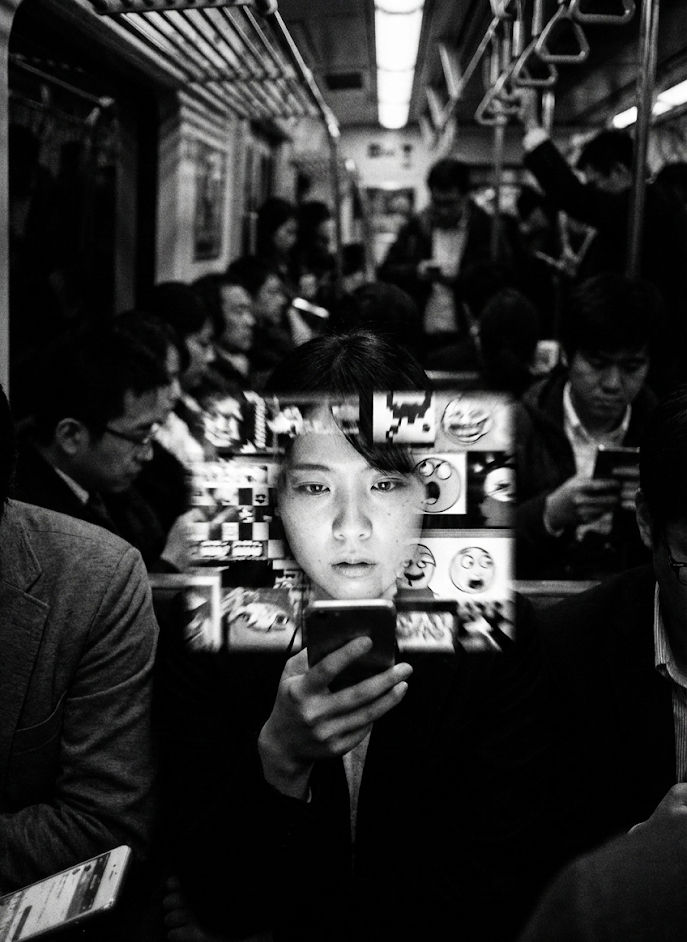
Japan: Imported fear as “common sense”
The example that made me see this clearly was Japan.
The other day I saw a documentary about Japan: a country with a very low birth rate, areas where the average age is around fifty… and yet, people demonstrating —something unusual there— shouting that they don't want Muslims in Japan, that they don't want to “be Europe”.
And that led me to a simple question: in what world does Japan have an "immigration problem" comparable to Europe's?
Japan has a very small immigrant population compared to Western countries, so the panic doesn't make sense given the numbers. And yet, the fear is expressed with the same vocabulary, the same gestures, and the same tone you see on social media in the West.
That's what alarms me: not that there are people with opinions, but that the emotional template seems imported.
Moreover, when discussing real problems in certain areas, it's often not "immigration" that disrupts daily life, but rather a certain type of tourism and influencer dynamics: overcrowded neighborhoods, intrusive behavior, and constant spectacle. But the focus of fear isn't placed there. It's placed on "Muslims." Why? Because these narratives don't need to be true to reality: they need to go viral. They don't need to describe the world: they need to dominate it emotionally.
“Common sense” is not logic:

It is emotional consensus
Here's the crux of the matter: you don't need a massive problem for massive fear to exist. You just need a narrative framework that's catchy, repeatable, and emotionally resonant enough. "Common sense" isn't logic. It's emotional consensus. It is a social construct that depends more on what the majority feels at a given moment than on what can be calmly demonstrated. If the framework tells you what to fear, who to target, and how to sound "normal" when saying it, the job is almost done. All that's needed is for enough people to repeat it for it to seem like it's always been true. And in a herd mentality, this happens even faster: what's "normal" becomes law without the need for a law. People don't adopt an idea because they've reasoned it out, but because they perceive it as already bearing the stamp of "sensibility." That's where memetics begins to resemble a religion: it doesn't demand proof, it demands membership; it doesn't ask you to investigate, it asks you to repeat; it doesn't offer doubt, it offers certainty.

Conspiracies: sometimes they're not plans, they're scripts
Here's an idea I can't get out of my head: many "conspiracy theories" don't work like actual plans written in an office. They work like social scripts that circulate for years. Ideas that are repeated, become familiar, and, when the right context arises, become acceptable. You don't need someone to orchestrate everything from above. The script simply needs to be rehearsed enough so that, when the moment arrives, it feels "natural." And social media is the perfect medium for that: virality, repetition, clips, template phrases, "example" stories shared like statistics.
An ideal framework for turning biases into common sense.
Defense: A brutally simple rule
If you want to regain control without going full Zen monk, the rule is simple: when something makes you instantly angry, stop for thirty seconds and ask yourself three questions:
What frame are they trying to sell me?
What emotion do you want me to feel?
What piece of information would be missing to make this not so perfect?
Because today you don't need to be convinced with arguments: it's enough to put a frame in your head, repeat it to yourself until it sounds "normal" and surround yourself with people who say it with confidence.
And confidence is more contagious than truth.
Glossary:
Emotional consensus — Redefinition of "common sense" raised in the text: it is not a logical or empirical truth, but a social construction validated by what the majority feels —or says they feel— at a given moment.
Framing — A narrative structure that predetermines how reality is interpreted before it is analyzed; it does not tell you what to think, but from where to think, eliminating nuances to provoke an automatic reaction.
Memetics — A theoretical discipline that studies cultural ideas and behaviors as if they were living organisms (memes) that replicate, mutate, and compete to survive in the human mind, in a way analogous to biological genetics.
MK-Ultra — A secret and illegal CIA program (1953-1973) that experimented with mind control, hypnosis, and drugs (LSD) on humans.
NPC — Acronym for Non-Player Character . A term originating in video games to designate computer-controlled characters; in current political discourse, it is used pejoratively to dehumanize the adversary, implying that they do not think and only repeat slogans.
Confirmation bias — A cognitive tendency to favor, seek out, and interpret information that confirms one's own beliefs or hypotheses, while ignoring evidence that contradicts them.
Woke — An Anglo-Saxon term (originally meaning "awakened" to racial injustice) that has mutated into a widespread political label. In the "culture war," it is often used as a pejorative framework to group together and dismiss any progressive or identity politics.


Comments